I recently sat on a panel at George Washington University to discuss Congress’s capacity for oversight: resources, staffing, expertise, and the like. My topline takes on this topic are:
Congress has a principal-agent relationship with the executive branch. The legislature (principal) may pass a law and establish an executive branch agency (agent). That agency has the duty to implement a statute and expend congressionally authorized and appropriated funds as the law dictates.
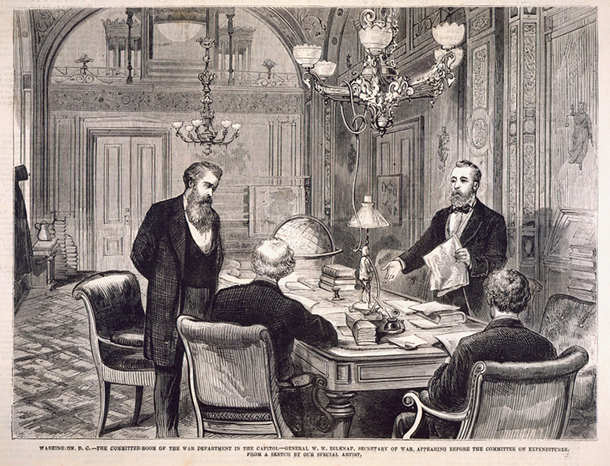
To ensure the executive has faithfully executed the law and used public funds appropriately, and to assess the effectiveness of the statute, Congress must engage in oversight. For this relationship to work properly, however, Congress must know and understand what the executive branch is doing. And that means keeping tabs on the executive branch and, for that matter, paying attention to the private sector too.
Congressional oversight also is a valuable exercise for other reasons. For one, it is a means for Congress to ferret out failing federal programs and corruption, and to correct problems. It also is a means for legislators to learn more about how policies are being implemented, and it is a means for Congress to respond to problems afflicting the public.
Not to be undersold: Conducting oversight presents an opportunity for legislators to develop trust-based relationships with people implementing the law. Policymaking in our constitutional system is a partnership between the branches, and too often Congress and the executive branch treat one another as enemies. That’s bad for governance.
Yes, it is congressional committees—and representatives and senators individually—who have formal authority for conducting oversight. But they are aided in their work by exogenous actors. Whistleblowers in and out of government bring corruption to light. The media expose mischief. Inspectors general and the various legislative branch support agencies, such as the Government Accountability Office (GAO), produce factual reports and analyses that help create an information-rich environment that can inspire and aid enterprising committees and legislators in conducting oversight.
And, yes, individual Americans can contribute to oversight by writing to their legislators and to the committees of jurisdiction to share their concerns.
Before making my case that congressional capacity to conduct oversight is lagging, I should first note that one’s judgment of Congress’s capacity to conduct oversight is affected by one’s expectations. To use some old political science terms, do you want police-patrol oversight or fire-alarm oversight?
Police-patrol oversight is a resource-intensive approach because it puts watchful eyes on all the areas within a committee’s discretion. And committees’ jurisdictions are very wide.
Fire-alarm oversight is a less resource-intensive approach. It focuses committee attention on a few oversight matters and then relies on the media, inspectors general, and other outsiders to pull a fire alarm when an agency or private-sector actor does something problematic.
In practice, I should add, committees fall between those two extremes but tend to be closer to the fire-alarm model. Everything in Congress is political and personal to some degree, so the topics any one committee most oversees are affected by the interests of the committee chair and the chair’s party.
Now, having laid that out, I confess that I am more of a fan of police-patrol oversight. I would favor committees keeping tabs more consistently on the various matters across their jurisdictions. Maybe not all of them, but most of them.
My reason is straightforward: It is foolish for Congress to trust that the executive branch will follow the law and that everything will go well. Untold billions of dollars have been wasted on failed weapons and programs. Many federal employees and Americans have had their lives damaged by government screw-ups. It strikes me as immoral for committees to take the attitude, “Well, we can always punish and correct wrongdoing post facto so long as someone lets us know.” Often nobody pulls a fire alarm, or someone pulls it long after massive damage is done. Really, should we be happy if the firefighters appear after a building is 90 percent torched?
Moving along to the matter of congressional capacity, it is clear that the trendlines of matters requiring oversight and Congress’s capacity are diverging. The federal government has gotten bigger, and congressional capacity has not kept pace. This trend began a century ago when we moved away from the minimalist, night-watchman vision of the federal government, and it has accelerated over the past 50 years.
Consider:
Congress’s capacity to keep tabs on the executive branch’s activities, to say nothing of the private sector, has lagged severely, largely because of limited human resources. Conducting oversight requires humans to absorb information, make sense of it, decide whether to take action, and then act (or not).
So let me offer a few data points on Congress’s human resources:
Human resources are but one factor in oversight, but I have not seen any evidence that Congress has made up for this people gap with huge investments in technology.
A new Congress begins in January. There might be new majorities in one or both chambers, and the business of creating the annual federal budget will begin. I hope that legislators will view the new Congress as an opportunity for the institution to invest more in itself.
Congressional oversight need not be a partisan exercise. History is replete with examples of legislators from both sides of the aisle partnering to use congressional oversight authority responsibly.
And who knows, maybe Congress could bolster its own sorry reputation with voters by using oversight to clean up government waste, fraud, and abuse; end failed policies and programs; and improve the efficacy of existing policies. It could not hurt to try, could it?
Kevin R. Kosar (@kevinrkosar) is a senior fellow at the American Enterprise Institute and edits UnderstandingCongress.org.
Stay in the know about our news and events.